
Sure! Here’s the introduction for your blog article:
Geek
Welcome to our latest blog post on CSV to Columns. In this article, we will explore the different methods and techniques to efficiently convert CSV (Comma Separated Values) files into columns using various programming languages and tools. Whether you’re a data enthusiast or a programmer, this guide is packed with valuable insights to help you streamline your data analysis process. So let’s dive in and uncover the magic of converting CSV files to columns!
Converting CSV Files to Columns: The Tech Perspective
Converting CSV files to columns can greatly enhance data organization and analysis. By leveraging the power of technology, we can streamline this process and extract valuable insights from raw data.
CSV files, or Comma-Separated Values files, are commonly used for storing tabular data. However, they often pose challenges when it comes to data manipulation and presentation.
One effective way to tackle this issue is by transforming CSV files into columns. This involves extracting the data from individual cells within the CSV file and arranging them into separate columns, making it easier to analyze and visualize the data.
Technology plays a vital role in simplifying this conversion process. Various programming languages, such as Python or R, offer libraries and modules specifically designed for handling CSV files. These tools provide functions and methods that allow for efficient extraction, transformation, and loading of data.
Additionally, spreadsheet software like Microsoft Excel or Google Sheets also offer built-in features for converting CSV files to columns. These applications provide user-friendly interfaces that make the process accessible even to non-technical users.
By utilizing technology, we can automate the conversion process, efficiently process large datasets, and reduce human error in data transformation. This empowers data analysts, scientists, and business professionals to focus more on interpreting the data rather than spending time on manual data manipulation.
In conclusion, leveraging technology to convert CSV files to columns is a valuable technique in the realm of data management and analysis. It enhances data organization, facilitates data interpretation, and enables efficient decision-making based on insights derived from tabular data.
Frequent Questions
What is the easiest way to convert a CSV file into separate columns?
The easiest way to convert a CSV file into separate columns is by using a spreadsheet software like Microsoft Excel or Google Sheets. These programs have built-in functionality to import CSV files and automatically separate the data into different columns based on the delimiter used in the CSV file (usually a comma). Simply open the CSV file in Excel or Google Sheets, and the data will be organized into separate columns.
Are there any tools or software available to automatically split a CSV file into columns?
Yes, there are several tools and software available to automatically split a CSV file into columns. Some popular options include Microsoft Excel, Google Sheets, Python’s pandas library, OpenRefine, and CSVKit. These tools offer various functionalities and flexibility to split and manipulate CSV data efficiently.
Can you provide step-by-step instructions on how to convert a CSV file into separate columns manually?
To convert a CSV file into separate columns manually, follow these steps:
1. Open the CSV file using a spreadsheet program like Microsoft Excel or Google Sheets.
2. Select the entire column that contains the data you want to split into separate columns.
3. Go to the “Data” tab and click on the “Text to Columns” option.
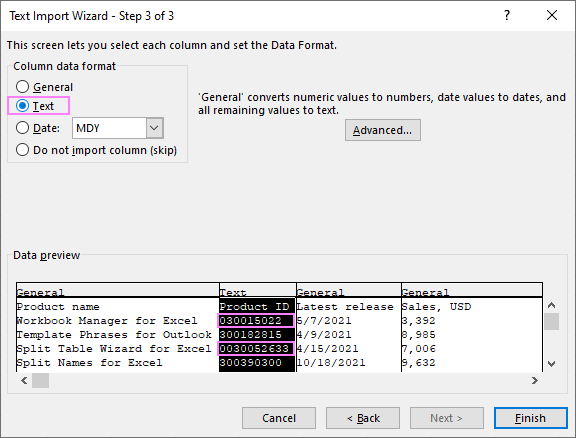
4. In the Text to Columns Wizard, choose the delimiter that separates the data in your CSV file (e.g., comma, tab, semicolon).
5. Customize the column data format if needed and click “Finish.”
6. The data from the selected column will be split into separate columns based on the chosen delimiter.
Note: This is a manual process and may require adjusting settings depending on the specific structure of your CSV file.
In conclusion, the process of converting CSV to columns is a vital skill for any tech-savvy individual. With the use of powerful tools and programming languages such as Python, this task has become more convenient and efficient. By leveraging the pandas library, developers can easily manipulate and transform CSV data into well-structured columns. This enables seamless analysis, visualization, and integration with other technologies. Whether it’s for data cleaning, data exploration, or data wrangling purposes, mastering the art of converting CSV to columns opens up a world of possibilities in the realm of technology. Stay empowered and keep exploring!