
Welcome to my geek blog! In this article, we will dive into the fascinating world of data analysis and learn how to test for normal distribution using Excel. Discover the power of statistics as we explore various methods to assess the distribution of your data. Let’s get started!
Testing for Normal Distribution in Excel: A Technological Approach
Testing for Normal Distribution in Excel: A Technological Approach
In the field of technology, Excel is a widely used tool for data analysis and statistical calculations. One important aspect of data analysis is determining whether a dataset follows a normal distribution, which is essential for many statistical tests and models.
Normal distribution, also known as the Gaussian distribution, is a bell-shaped probability distribution that is commonly found in many natural phenomena. In order to test for normality in Excel, we can use several technological approaches.
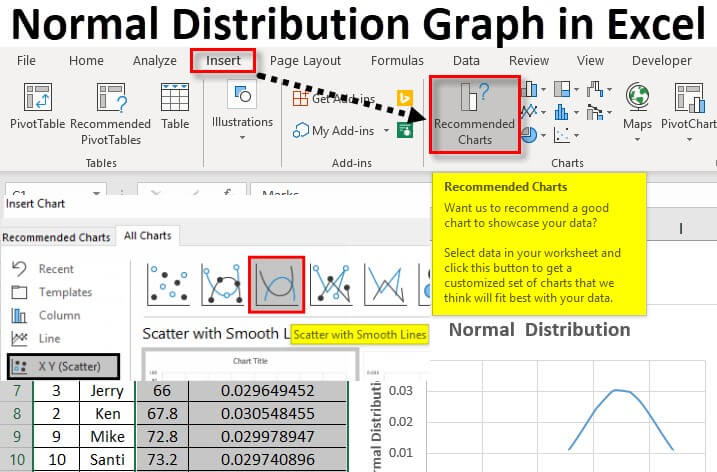
One approach is to visually examine the distribution of the data using a histogram or a density plot. These graphical representations can give us a quick overview of the shape of the data and whether it resembles a normal distribution. Excel provides built-in tools to create histograms and density plots, making it easy to visually assess the normality of the data.
Another approach is to use statistical tests specifically designed to test for normality. Excel offers various statistical functions that can be used for this purpose, such as the SHAPIRO function. This function calculates the Shapiro-Wilk test statistic, which is commonly used to test the null hypothesis that the data is normally distributed. By comparing the test statistic to critical values, we can determine whether the data significantly deviates from normality.
Additionally, there are advanced Excel add-ins and plugins available that provide more powerful tools for testing normality, such as the Anderson-Darling test or the Kolmogorov-Smirnov test. These tools offer more robust statistical tests and provide more detailed information about the degree of deviation from normality.
In conclusion, Excel offers a range of technological approaches for testing normality in datasets. Whether using built-in functions or advanced add-ins, technology can greatly aid in the analysis of data and the determination of normal distribution, providing valuable insights for further statistical modeling and decision-making.
Frequent Questions
How can I use Excel to test if my data follows a normal distribution?
You can use the NORM.DIST function in Excel to test if your data follows a normal distribution.
Are there any built-in functions or tools in Excel to assess normality of data?
Yes, Excel provides built-in functions and tools for assessing the normality of data.
What are the steps to perform a normality test in Excel?
The steps to perform a normality test in Excel are as follows:
1. Input your data into an Excel spreadsheet.
2. Calculate the Z-scores for each data point using the formula: =NORM.S.INV(RANK.AVG(A2,$A$2:$A$11,0)/(COUNT($A$2:$A$11)+1))
3. Create a scatter plot with the Z-scores on the x-axis and the data values on the y-axis.
4. Add a trendline to the scatter plot by right-clicking on a data point, selecting “Add Trendline,” and choosing the desired regression type (e.g., linear).
5. Check the R-squared value of the trendline. A higher R-squared value indicates a better fit to a normal distribution.
6. Alternatively, you can also use the Anderson-Darling test or Shapiro-Wilk test available through Excel add-ins or statistical software for a more rigorous normality test.
Remember, these steps are a basic guide, and it’s important to evaluate the results critically and consider additional statistical tests if necessary.
In conclusion, testing for normal distribution in Excel is a valuable tool for technology enthusiasts and data analysts. By utilizing the NORMDIST function, we can objectively assess the distribution of our data and make informed decisions based on statistical analysis. Understanding how to test for normal distribution helps us uncover insights, identify patterns, and validate assumptions about our technological innovations. With this knowledge at our disposal, we can confidently navigate the ever-evolving landscape of technology with data-driven precision.