
Sure! Here’s an introduction for your blog post:
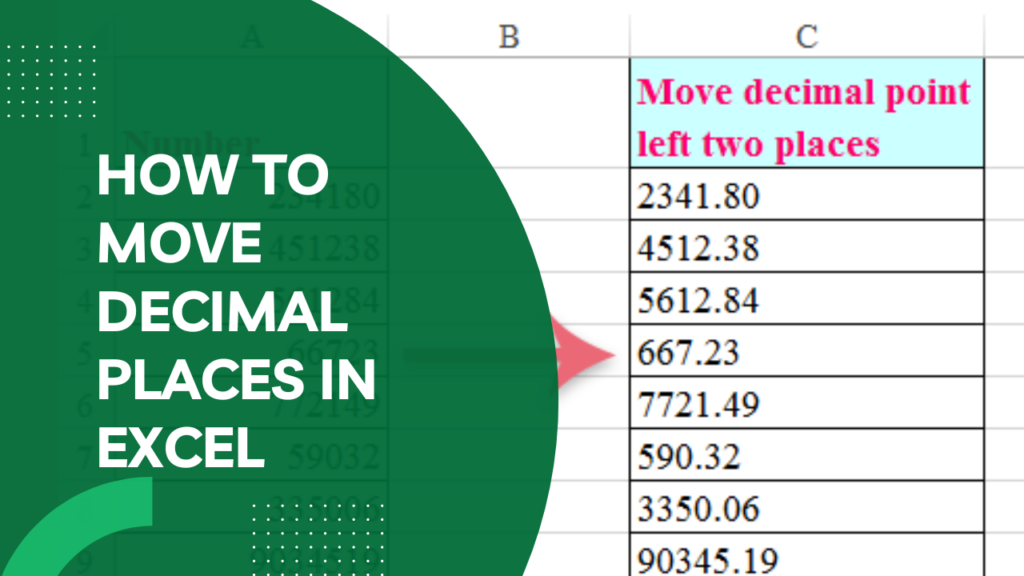
Learn How to Move Decimal Places in Excel: Discover the essential steps and techniques to easily manipulate decimal points in Excel. Whether you’re working with financial data or simply want to format numbers accurately, this guide will help you master this fundamental feature in Excel. Get ready to enhance your spreadsheet skills!
Remember to replace the HTML tags with the appropriate HTML code when publishing the text on your blog.
Moving Decimal Places in Excel: Simplifying Data Manipulation and Analysis
Moving Decimal Places in Excel: Simplifying Data Manipulation and Analysis
Excel is a powerful tool for data manipulation and analysis. One of its handy features is the ability to move decimal places, which can simplify complex calculations and make data easier to interpret.
To move decimal places in Excel, you can use the “Format Cells” option. Select the cells containing the data you want to modify, right-click, and choose “Format Cells” from the context menu. In the “Number” tab, select the desired category (e.g., “Number” or “Currency”) and specify the number of decimal places you want to move. You can choose to increase or decrease the decimal places based on your needs.
By moving decimal places, you can make data more readable and manageable. For example, if you’re dealing with large numbers, such as sales figures or financial data, you might want to move decimal places to show only the most significant digits, making the values easier to compare and comprehend at a glance.
Moreover, moving decimal places can assist in performing calculations accurately. When working with intricate formulas or complex calculations, adjusting decimal places can help ensure precision in your results. It helps eliminate rounding errors or unnecessary decimal places that may interfere with the accuracy of your analysis.
In addition to simplifying data manipulation and analysis, moving decimal places can enhance visual representation. Excel charts and graphs can be more visually appealing when decimal places are adjusted appropriately. By reducing the number of decimal places displayed, you can avoid cluttering your visuals with unnecessary detail, creating a cleaner look that focuses on the essential information.
In conclusion, Excel’s ability to move decimal places greatly simplifies data manipulation and analysis. Whether you need to improve readability, ensure accuracy, or enhance visual representation, adjusting decimal places can be a valuable technique in effectively working with numerical data. So, next time you’re crunching numbers in Excel, consider utilizing this feature to streamline your processes and optimize your data analysis.
Frequent Questions
How can I change the number of decimal places displayed in Excel?
To change the number of decimal places displayed in Excel, you can use the Number Format option. Select the cells you want to format, right-click and choose Format Cells. In the Format Cells dialog box, go to the Number tab and select Number under Category. Then, specify the desired number of decimal places in the Decimal places field.
Can Excel automatically move decimal places based on a specific formula or condition?
No, Excel does not have a built-in feature that can automatically move decimal places based on a specific formula or condition.
Is there a way to configure Excel to always display a certain number of decimal places regardless of the input data?
Yes, Excel provides a way to configure the number of decimal places displayed using the Number Format options.
In conclusion, mastering the skill of moving decimal places in Excel is an essential tool for anyone working with numerical data in the world of technology. By utilizing the FORMAT function and understanding the number formatting codes, users can easily manipulate decimal positions to align with their specific needs. This knowledge not only streamlines data analysis but also enhances accuracy and efficiency. Whether you are a data analyst, accountant, or tech enthusiast, mastering this technique will undoubtedly elevate your proficiency in Excel and empower you to confidently work with numerical data. So, go ahead and explore the fascinating world of decimal manipulation in Excel, and unlock limitless possibilities in the realm of technology.