Some games die before they’re born, and nobody ever hears about them. Ignite, the shooter Dark Outlaw Games was building, almost became one of them: Sony shut the studio down in March 2026 without ever announcing what it had been working on. Eight months later, a 22-minute investigation by creator Glitching Queen, posted to YouTube on November 5, and information journalist Tom Henderson of Insider Gaming had been sitting on for a book about cancelled games, finally put a face and a set of mechanics on the ghost project: a dark fantasy shooter called Ignite, sitting somewhere between DOOM Eternal and Call of Duty Zombies.
Let’s get one thing straight up front: none of this is official. Sony never announced Ignite, never showed a single image of the game, and never explained why it was cancelled. Everything that follows comes from investigation, from public professional profiles, and from internal emails Insider Gaming got its hands on. What follows is a portrait of a game that existed and doesn’t anymore, assembled from what’s been reported.
“Ignite”: the shooter Sony never got around to announcing
Dark Outlaw Games was a first-party PlayStation studio based in Los Angeles. Jason Blundell founded it in 2024 — a Treyarch veteran and one of the names behind Call of Duty Zombies — and it was announced publicly in March 2025. Barely a year later, in March 2026, Sony closed it. Bloomberg’s Jason Schreier broke the news on Bluesky: around 50 layoffs in total, including roles in PlayStation’s mobile business. Sony confirmed the closure to PC Gamer without putting a number on it, talking about “strategic adjustments” for the long-term sustainability of its studio group.
The studio never showed anything of its project. That’s why Glitching Queen’s 22-minute video landed like a bomb: for the first time, someone had reconstructed, piece by piece, what that team had actually been working on. Insider Gaming expanded the story on November 6 with details from its own sources, and KitGuru picked it up on November 9.
According to what’s been reported, Ignite was a first-person dark fantasy shooter, an original IP, built for PlayStation 5 in Unreal Engine 5. The summary slide in the video describes it as a AAA game with roughly a year of development behind it, from 2025 to 2026. There is no release date, because there never was one: the game was cancelled before Sony ever announced it. One caveat worth stating plainly: the PS5 and Unreal Engine 5 details come only from the summary slide Glitching Queen flashes at the end of her video. They are reported, not confirmed.
DOOM Eternal on one side, Call of Duty Zombies on the other
The first surprise is the mix. The game was, according to Henderson, “heavily inspired by the DOOM saga,” and closer to DOOM Eternal than to anything else in gameplay and level design: fast combat, levels with the scale and pace of Call of Duty, choreographed and cinematic set pieces. The campaign, as reported, was linear and story-driven, and playable in co-op.
The second ingredient is the one you’d expect with Blundell in charge: the DNA of Call of Duty Zombies. The project included a Zombies-style horde mode, plus Easter eggs and minigames. The combination makes sense: the aggression and pace of DOOM Eternal with the rounds, secrets, and rewards structure Blundell turned into a phenomenon at Treyarch. Henderson sums it up in a single line: it was a game Zombies players would have loved.
There’s a nuance Henderson himself stresses: for all that Blundell’s name brings Zombies to mind, in gameplay and level design Ignite looked more like DOOM Eternal. It wasn’t Zombies under a different name, but a campaign shooter with DOOM’s stamp on it and a horde mode as a complement.
The amulet and the layered gore: the mechanic that set it apart
If Ignite had an idea of its own, it was gore turned into a system. According to the design documents Insider Gaming got access to, the gore wasn’t spectacle: it was the game’s central mechanic. The character wore an amulet and had to deal as much damage as possible to enemies in order to “feed” off them: the more damage you dealt, the more health and power you got back. Violence was the fuel.
The system went further. Enemies had distinct “layers” — skin, muscle, and bone — that broke apart depending on the weapon or the melee attack. The idea was a graphic experience where every enemy came apart piece by piece, and where playing aggressively wasn’t an option, it was how you survived.
It’s a design that recalls, in spirit, the logic of DOOM Eternal, where combat is also resource management: glory kills restore health there, the chainsaw restores ammo; here, damage fed the amulet. Ignite carried that idea into horror and dark fantasy, with monsters and several enemy archetypes. Nothing is known about the story or the characters: PlayStation’s nondisclosure agreements are still in force, and Glitching Queen herself admits that much of the information leaves a lot to the imagination.
Linear campaign, co-op, and a horde mode
The rest of the portrait comes from the feature summary Glitching Queen shows at the end of her investigation: a list of reported features, not an official spec sheet. Beyond the co-op campaign and the horde mode, the game had monsters and several enemy archetypes, a progression system, character building, a distinct identity for each weapon, an economy system, several bosses with their own combat arenas, puzzles, and missions.
That’s a long list for a game that lived for about a year, and it says something about the team’s pace: Henderson has been holding gigabytes of screenshots, videos, and documents on the project since the cancellation, for a book about cancelled games. That much material suggests development was moving fast, and that there was a lot more than a handful of design documents.
What’s missing everywhere is the story. No character names, no concrete setting, no synopsis. It’s the biggest hole in the entire investigation, and it will probably stay that way: PlayStation’s nondisclosure agreements are famously strict, and former employees can barely talk about the project, as Blundell himself acknowledged shortly after the closure.
A year in development — and the work farmed out to GRIP Studios
Glitching Queen’s investigation adds a piece Insider Gaming and KitGuru don’t mention: part of the work was outsourced to GRIP Studios, a Prague outfit. The evidence is public professional profiles. A senior AI designer describes on his résumé an “unannounced AAA title” at GRIP Digital between July 2025 and April 2026, with work on boss battles and enemy archetypes. A GRIP executive producer talks about a “project: unannounced PS5-exclusive first-person shooter (single player / co-op)” between February and March 2026, and about leading the project’s orderly wind-down after a strategic shift.
Those profiles don’t name Ignite, and that has to be said plainly: the connection is the investigation’s, not an official confirmation. But the dates line up with Dark Outlaw Games’ closure in March 2026, and the video’s summary lists the outsourced work to GRIP Studios among the project’s features. If the reconstruction is right, Ignite wasn’t just the work of a small Los Angeles studio: it was an effort spread across two continents, with a support team in Prague working on the enemies and the boss fights.
The detail also explains the scale of the project. Dark Outlaw Games had, according to its LinkedIn page, between 11 and 50 employees: a studio that size doesn’t build a AAA with a campaign, co-op, a horde mode, and bosses on its own. With part of the work in Prague, and the closure hitting in March 2026 on both sides, the picture is complete: a project cancelled abruptly, mid-production.
Why it was cancelled: budget, not quality
The question is why. According to the internal emails Insider Gaming got access to, the answer is anything but mysterious: PlayStation executives reprioritized the budget across their portfolio amid the market’s challenges. It wasn’t about the game’s quality, or a technical problem, or a creative change. It was a portfolio decision.
Dark Outlaw was the second PlayStation studio closure in barely two months — Bluepoint Games, the studio behind the Demon’s Souls remake, had closed in February 2026 — and it landed in the middle of the hangover from Sony’s live-service bet: Concord was pulled shortly after launch, and a God of War live-service game and The Last of Us multiplayer were cancelled. In that climate, a traditional project could fall too if the numbers didn’t add up. And here’s the irony TweakTown pointed out: Blundell confirmed in a livestream the day after the closure that Dark Outlaw’s game was not a live-service game. Sony cancelled a traditional project while cutting its live-service ones.
The market wasn’t helping either. It’s a year when costs are climbing everywhere — memory prices have risen so much they’re pushing hardware prices up — and the industry is concentrating its bets on the safe launches, like GTA 6, which arrives on November 19. It’s not the only move on Sony’s first-party board, either: God of War Laufey slipped to May 20, 2027. Ignite, unannounced, with no date and no trailer, was the perfect candidate for the cut: cancelling it cost no headlines, just a studio.
Jason Blundell: two studios closed, a third try
Behind Ignite there’s a personal story that explains part of the buzz. Jason Blundell is one of the big names in Call of Duty: at Treyarch he was one of the minds behind the Zombies mode, which he turned into a phenomenon with its own mythology and community. He left Treyarch in February 2020, and he hasn’t shipped a game since.
His first attempt was Deviation Games, which he co-founded in 2020 with Dave Anthony in partnership with PlayStation to create an original IP. Blundell left the studio in 2022, and Deviation closed in 2024 without ever announcing its game. His second attempt was Dark Outlaw Games: founded in 2024 inside PlayStation Studios, announced in March 2025, and closed in March 2026, also without announcing its project. Two studios, two closures, zero games shipped.
The day after the closure, Blundell sat down for a livestream with JCbackfire, a former Dark Outlaw developer and YouTuber. “I loved the kind of project we were working on. It wasn’t a live-service game,” JC said. “No,” Blundell replied. And when JC regretted not being able to say more, Blundell answered: “Yeah, we have to respect that,” because of the nondisclosure agreements. He also left a line that sounded like a promise: he had worked with “incredibly skilled craftspeople” and had to “get them all back.”
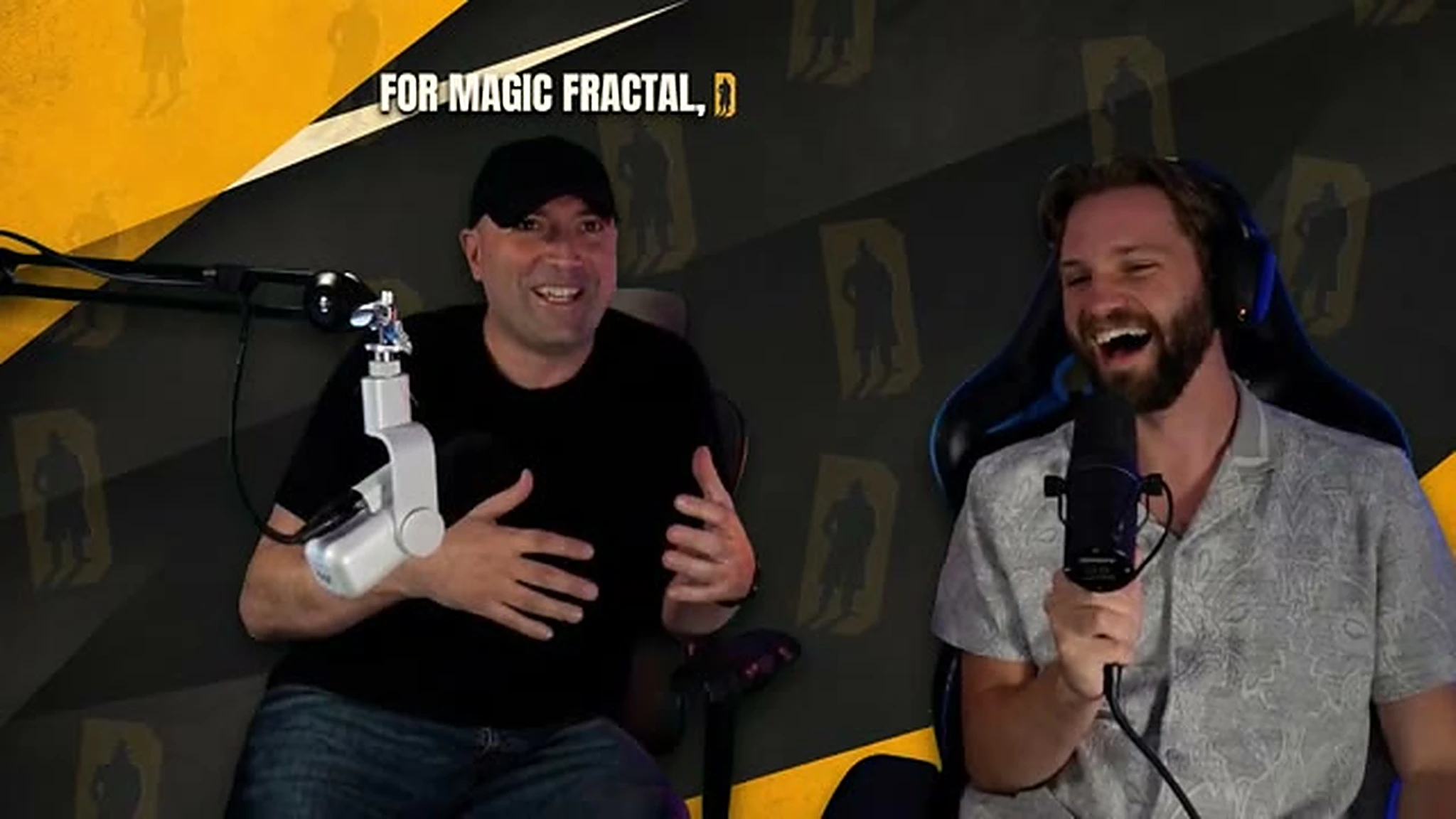
The promise was kept within a week. On April 2, 2026, in another livestream with JCbackfire, Blundell announced Magic Fractal, his third studio, this time going independent. Almost nothing is known about the new studio: its website is, for now, a contact page, and Blundell only showed a logo. Nearly seven years after leaving Treyarch, the creator of Zombies is trying again, without Sony behind him. That the announcement came so fast says something about what he lost with Dark Outlaw: not just a project, but a team he wanted to keep together.
What remains of Ignite — and why it matters
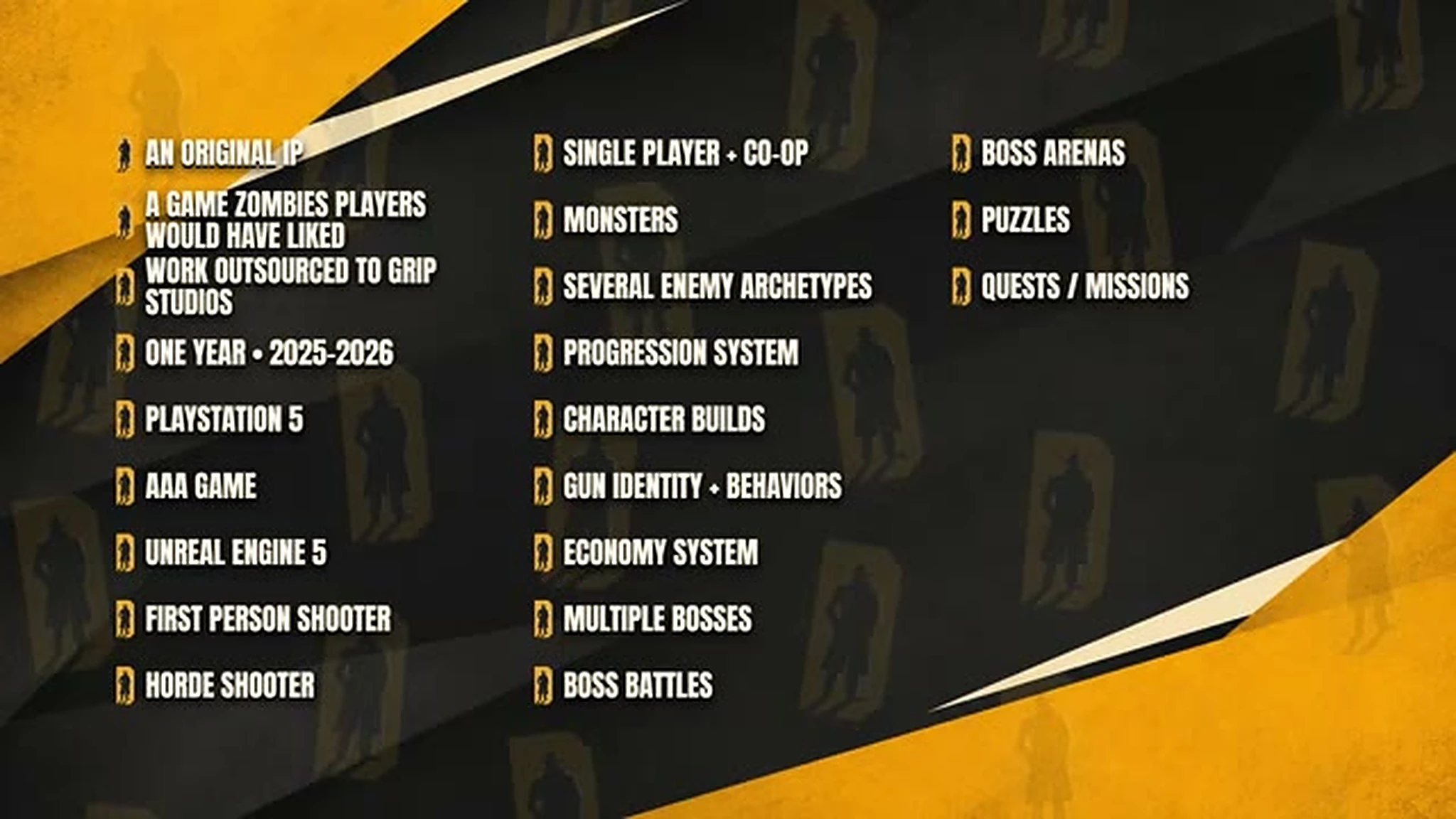
What remains of Ignite, for now, is paper and memory. Henderson is holding gigabytes of screenshots, videos, and documents for his book on cancelled games, so we’ll probably learn more in the future. Glitching Queen admits her investigation leaves a lot to the imagination: the nondisclosure agreements keep much of the story locked away, and what’s leaked is barely the surface.
And yet, it matters. Ignite was the crossing of two worlds that rarely meet: the DOOM Eternal-style campaign shooter and the Call of Duty Zombies horde mode, made by the man who invented the second one, with PlayStation’s budget behind it. That a project like that was cancelled over budget, not quality, says a lot about the industry today: unannounced games are the first to fall when the numbers tighten, and small studios pay the bill.
Ignite never got announced, but it has something many shipped games don’t: a story worth telling. A studio that lasted a year, a shooter that mixed two genre legends, and a creator who, for the third time, is starting over.