Path of Exile 2 finally has an early access exit date: Friday, December 11, 2026, Pacific time, and from that day on it will be free for everyone. Grinding Gear Games confirmed it at ExileCon 2026, its convention in Auckland, New Zealand, where director Jonathan Rogers laid out the full 1.0 package: the finished campaign, two new classes, a league that turns the game into strategy, and a thorough rework of the endgame.
One thing to get straight before going on: this is news a month in advance, not a launch today. The date was already set on August 25, and what ExileCon added was the content. There is also no exact opening time: Grinding Gear Games has not confirmed one, and the 19:00 UTC time circulating on the game’s wiki has no official backing. What follows is what the studio showed and confirmed on stage, not a promise about schedules.
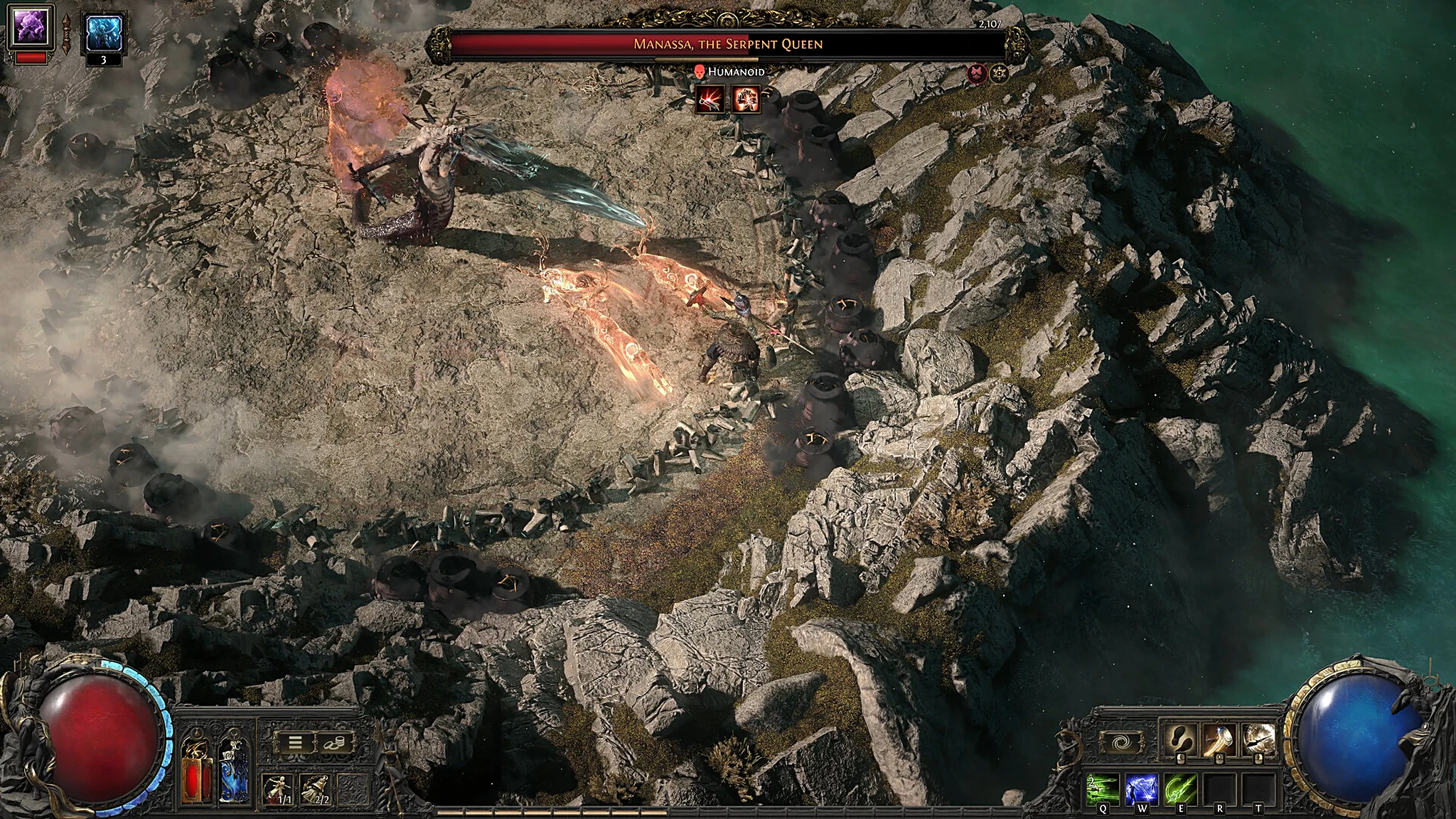
The date players have waited two years for
Path of Exile 2 entered early access on December 6, 2024, with paid entry: you had to buy a $30 supporter pack to play. Version 1.0 arrives almost exactly two years later and keeps the promise the studio made from the start: the game goes completely free, just like the first Path of Exile. Anyone who wants to play from December 11 onward pays nothing — no early access purchase, no waiting for a sale.
The game will be available on PC (Steam, the Epic Games Store, and Grinding Gear Games’ own client), PlayStation 5, and Xbox Series X|S. It is also Steam Deck Verified, so it runs on Valve’s handheld without unofficial workarounds. The date, though, is set in Pacific time: for players in New Zealand and Australia, where the studio is based, the launch will fall on Saturday, December 12 local time, unless the servers open before dawn in California.
The announcement came in the ExileCon keynote on November 6, Pacific time (November 7 in Auckland), at the Aotea Centre in New Zealand’s largest city. Rogers presented 1.0 as a reorganization of everything built during early access: not just another patch with new content, but the game put in order for its official service, with the complete campaign, a reworked endgame, and a launch league that changes how the game plays.
The campaign is finally complete: Acts 5 and 6
The biggest change in 1.0 is that the campaign finally ends. During early access only some acts were playable; the full version adds Acts 5 and 6 and closes out a six-act story. Between them they add 24 new zones and 18 unique bosses, plus more than 20 named rare monsters.
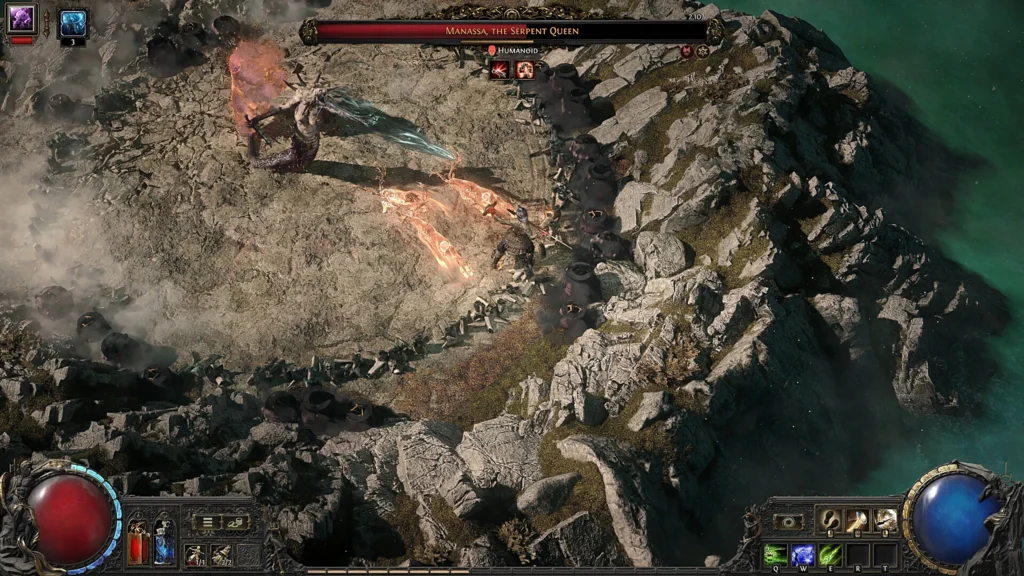
Act 5 takes place in Oriath, the starting point of the saga, a city in ruins after several cataclysms, where the player has to stop the Order of Twilight and the Beast. The port is blocked by giant chains, so there is no attacking from the sea: you have to land on the other side of the island, cross the city center, and lower the chains from within to open the way for allied forces. The new zones run from desolate slums to rich estates, the temple district, and a large arena, each with its own look and its own enemies. ExileCon had hands-on stations for Act 5 so attendees could try it before launch.
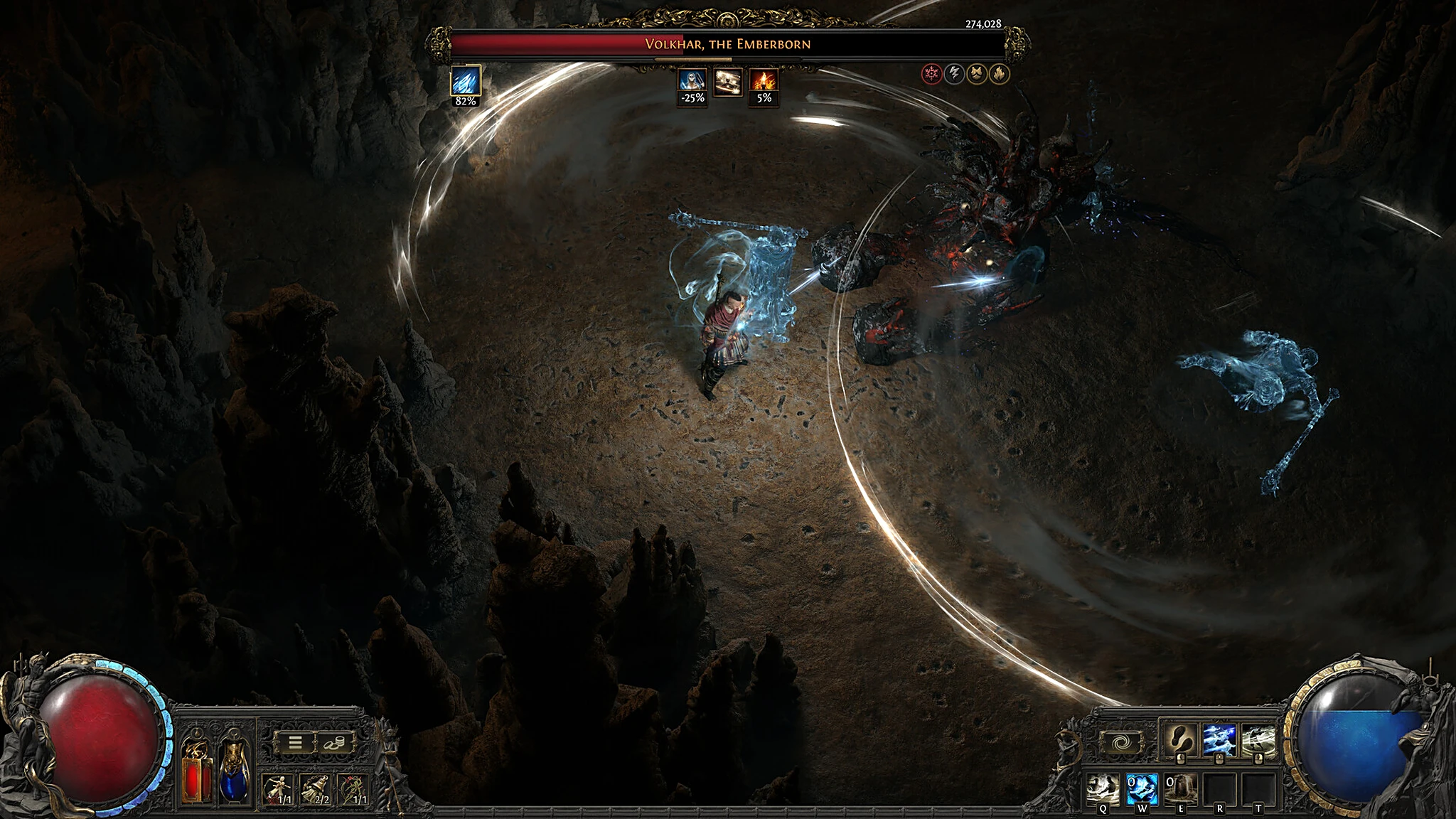
The bosses are another pillar of the new campaign: 18 unique bosses, from a giant rat king in the sewers to corrupt priests of the Order of Twilight and plague enemies, with fights that change phase and distinct attack patterns. The studio says they are some of the most complex and demanding encounters it has ever made. And rare monsters get an upgrade too: some are designed almost like mini-bosses, with their own appearance and skills, instead of just being a tougher version with bigger numbers. The idea is to keep the tension up even in stretches without a boss, which brings the game closer to what we have seen from the big Elden Ring encounters, where the large fights set the pace.
The Shadow: stealth, daggers, and traps
The big surprise of ExileCon was the second new class. The Duelist was already announced in August, but the Shadow was revealed in the keynote: a daggers-and-traps class built around a new mechanic, stealth. In stealth, monsters cannot see you until you get close, and skills used from stealth gain extra effects.
Stealth has a cooldown, but killing an enemy resets it, so the rhythm is chaining ambushes: slip in, strike by surprise, and move to the next target. One example the studio showed: using Viper Strike from stealth poisons the weapon and triggers a toxic explosion on the attacks that follow. The trap system also changes from the first game: there, traps were skills thrown at an enemy’s feet that triggered instantly; here you place them in advance and lure the enemy toward them. Traps placed in stealth do not detonate until stealth ends, and they go off in the order they were placed. There are eight trap types: you can embed shrapnel in an enemy with one trap and set it off with a freezing trap, or spread poison gas and ignite it with fire.
The Shadow also uses its own resource called Darkness: applying it to enemies and collecting it raises attack power when you leave stealth, and a shadow clone, the Shade, can draw enemy attacks or join in the surprise hits. Some skills open a shadow domain in which every attack counts as made from stealth. At launch it will have two ascendancies, Assassin and Infiltrator.
The Duelist and his squire
The Duelist is the sword class many players have been waiting for since August. Its mechanic is stances: Ready Stance boosts sword skills, each in a different way, and lets you chain them together. Its skills include Cyclone and Hemorrhage, and it can be played two-handed, dual-wielded, or with sword and shield.
Its first revealed ascendancy, the Knight, brings one of the most curious ideas in 1.0: a squire as a permanent companion, who can be equipped directly with items and skill gems to shape his role. He also plants a war banner that raises attack speed and damage for both the player and the squire, and he has commander and cavalry skills, like Mounted Charge, where you ride a war chariot pushing enemies aside. The Duelist’s second ascendancy is the Weapon Master. With these two classes, the game will have 10 playable classes and 26 ascendancies in 1.0, with more than 320 skills, according to Notebookcheck’s count.
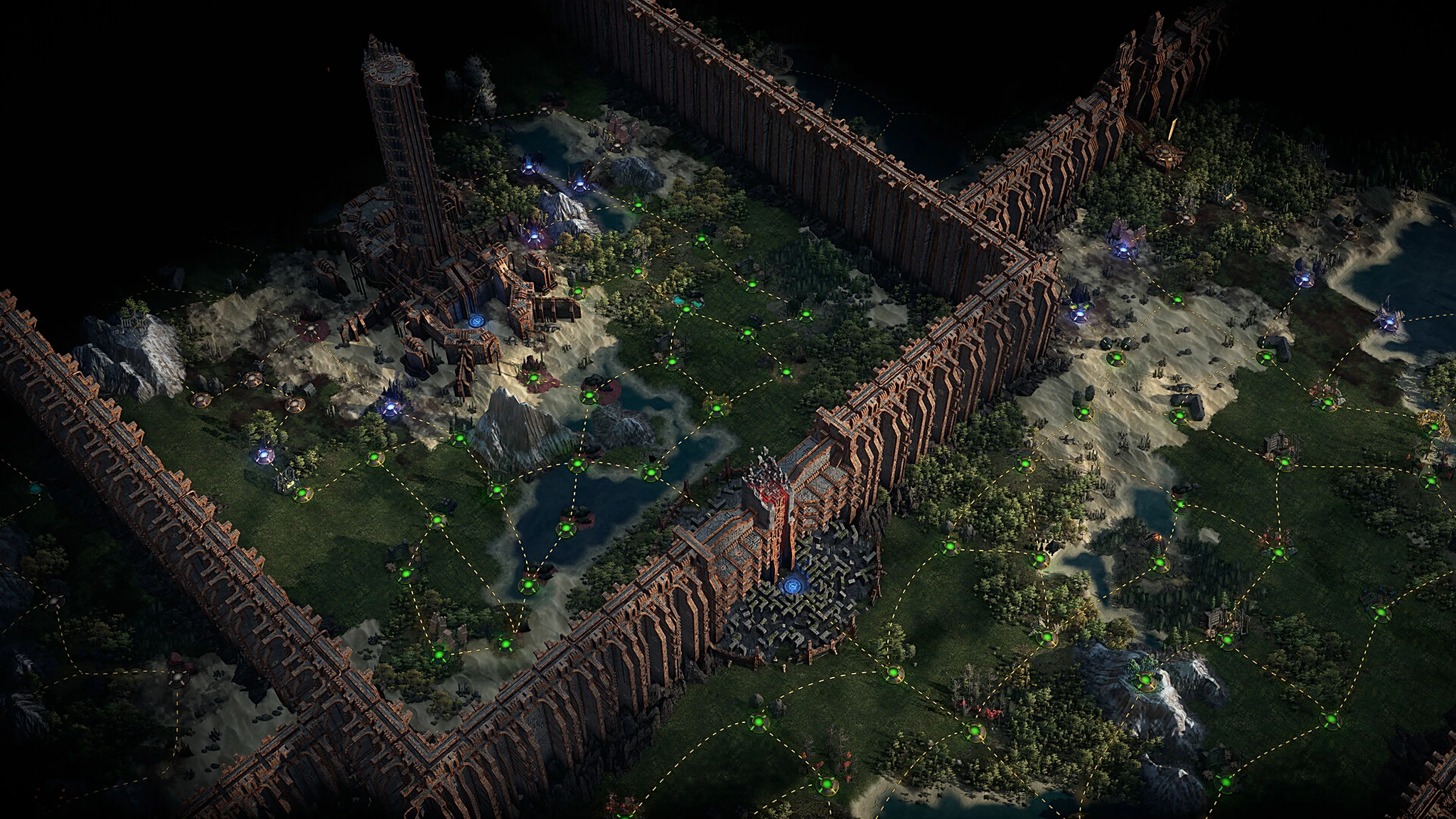
Conquerors of Wraeclast: a strategy game inside the ARPG
The launch league is called Conquerors of Wraeclast, and it is the closest thing to putting a strategy game inside an ARPG. The story starts with rescuing captured deserter mercenaries; Varek, the leader of the mercenary band, then helps manage the army. Mercenaries are hired with gold, and expeditions require securing supplies to keep the forces going.
The player recruits troops, builds a stronghold, and besieges rival castles, but it is not a matter of summoning allies and watching: you have to size up the enemy composition and deploy your forces before the battle, then fight on the front line. More than 70 points of interest spread across the campaign let you recruit forces or enter battles, with 23 standalone battles in the campaign alone, from defending a village to assaulting strongholds and knocking down city gates. Winning battles gives gold, supplies, and a special crafting material.
That material feeds reforge crafting, another league novelty: it lets you pick and re-roll specific equipment modifiers, with restrictions such as locking the modified option. In the endgame you can build and expand your own stronghold, with three architectural styles (Ezomite, Maraketh, or Karui) and more than 20 building types and upgrades. Developing it gives you more troops and unlocks commanders who explore the Atlas for you: you hand them troops and waystones and order them to clear maps, with several maps queued and up to three commanders at once. The studio did not confirm whether clearing continues while you are offline.
The league’s final goal is to capture 100 strongholds on the edges of the Atlas, on an Atlas shared between three factions competing for control. Capturing a stronghold gives a loot rarity bonus and perks for the whole faction, plus special hunting zones around it and bases to explore. In practice it is a mix of faction objectives with the usual solo progression.
The endgame changes too: Atlas, loot, and performance
Version 1.0 does not just add content: it revises the entire endgame. The Atlas passive tree is compressed from a sprawling structure to 70 nodes, with each node’s impact increased so choices carry more weight; according to the studio, players who focus on the main objectives will earn around 50 points by defeating the highest-level bosses. Travel through the endgame zones is simplified, and 25 new maps are added.
On loot, about 70 existing uniques get reworks to performance, effect, and appearance, and more than 40 new uniques are added, which the studio sums up as 110 new unique item experiences. More than 200 new base item types arrive as well, so loot from the new acts and the endgame is more varied. The skill passive tree changes too: the 18 jewel sockets that used to sit on the main paths become around 60 distributed inside the passive groups, and the connections between groups change to open new ways of building characters. Support gems are redesigned to work according to the properties of attacks and spells, and existing skills and ascendancies get balance adjustments.
And there are technical improvements that show up on the bill: CPU performance improved about three times over early access 0.1.0, and 1.0 alone adds another 25% efficiency, with memory cut by several hundred megabytes. Data optimization saved more than 30 GB of space, although about 40 GB of new content is added, so the total install size will not drop by that much.
What isn’t coming (or arrives half-finished)
Not everything will be finished by December 11, and Rogers said so himself in the keynote. Of the 12 promised classes, 10 will be in 1.0 and the other two will arrive in later updates. The transfer of cosmetic microtransactions bought in the first game for use in Path of Exile 2 will be a little over half complete at launch. Rogers apologized for both and said the work continues after launch.
One novelty that is coming, and that was revealed by accident, is the death recap. During the live demo at ExileCon, designer Mark Roberts’ character died on stage and the new window appeared on screen: it shows the damage taken and how much the defenses mitigated, so you can tell whether you are missing life, evasion, or a specific resistance. Rogers confirmed it later in an interview with PC Gamer on November 8. It has a limit for now: damage over time is recorded, but the system cannot always identify its source yet, and the team is working on it. Roberts added that, if players of the first game ask for it in large numbers, they will bring it to Path of Exile 1 as soon as possible.
Also worth noting is what remains unanswered: the exact opening time on December 11, which the studio has not given, and the full patch notes, which according to the ExileCon coverage should arrive about a week before launch, in the first week of December.
What to do until December 11
The practical question is whether it is worth buying early access now. The short answer is no, unless you cannot wait or you want the supporter packs: on December 11 the game is free on every platform, and what you buy today is playing early plus the pack extras, not the game itself.
Players who already played in early access should know what happens to their characters: they are not deleted, but they move to a separate permanent league called Early Access, where they keep their levels, gear, and stash, and they do not enter the new economy. The standard 1.0 league starts from zero for everyone, so on December 11 everyone begins on equal footing, with the full campaign, the two new classes, and the army league waiting.
While December arrives, the other big action RPG of the year on our radar is God of War Laufey, delayed to May 2027, and December 11 is one of the dates marked on the 2026 release calendar we covered here. For players of the first game, there is another nearby date: Path of Exile 1, version 3.30, Covens of Umbra, comes out on November 13. But the main event is December 11: two years of early access end with a free game, a complete campaign, and a league that turns the ARPG into strategy. The real test comes that day, when the servers open and players find out whether everything promised in Auckland is actually in the game.