Anthropic, the company behind the Claude assistant, has finally put a price on its IPO. On Tuesday, November 10, it filed amendment number 2 to its S-1 form with the SEC and launched its investor roadshow with a range of $70 to $78 a share, 825 million Class A shares, and the ticker ANT reserved on the Nasdaq. If everything sells at the top of the range, the deal would raise up to $64.35 billion and value the company at as much as $1.4 trillion on a fully diluted basis. It is the biggest AI IPO ever put on the table — and also one of the strangest: the company that sells the models is, at the same time, the one that depends on its own suppliers to train them, and those suppliers are the ones buying part of the offering.
The announcement needs to be read with the care it asks for. The range is an estimate, not a price. The $1.4 trillion valuation is the diluted figure; undiluted, the math comes to around $1.02 trillion. And the registration is not yet effective, so not a single share can be bought yet.
What Anthropic filed with the SEC
The document is amendment number 2 to the S-1 form, filed on November 10, 2026 and accepted by the SEC’s EDGAR system at 11:29 UTC. It is the first version of the prospectus to include a price range: the initial S-1, from October 26, and amendment number 1, from November 2, left that space blank. The same day, Anthropic published its own announcement: “Today, Anthropic, PBC, launched the roadshow for its proposed initial public offering of its Class A common stock.”
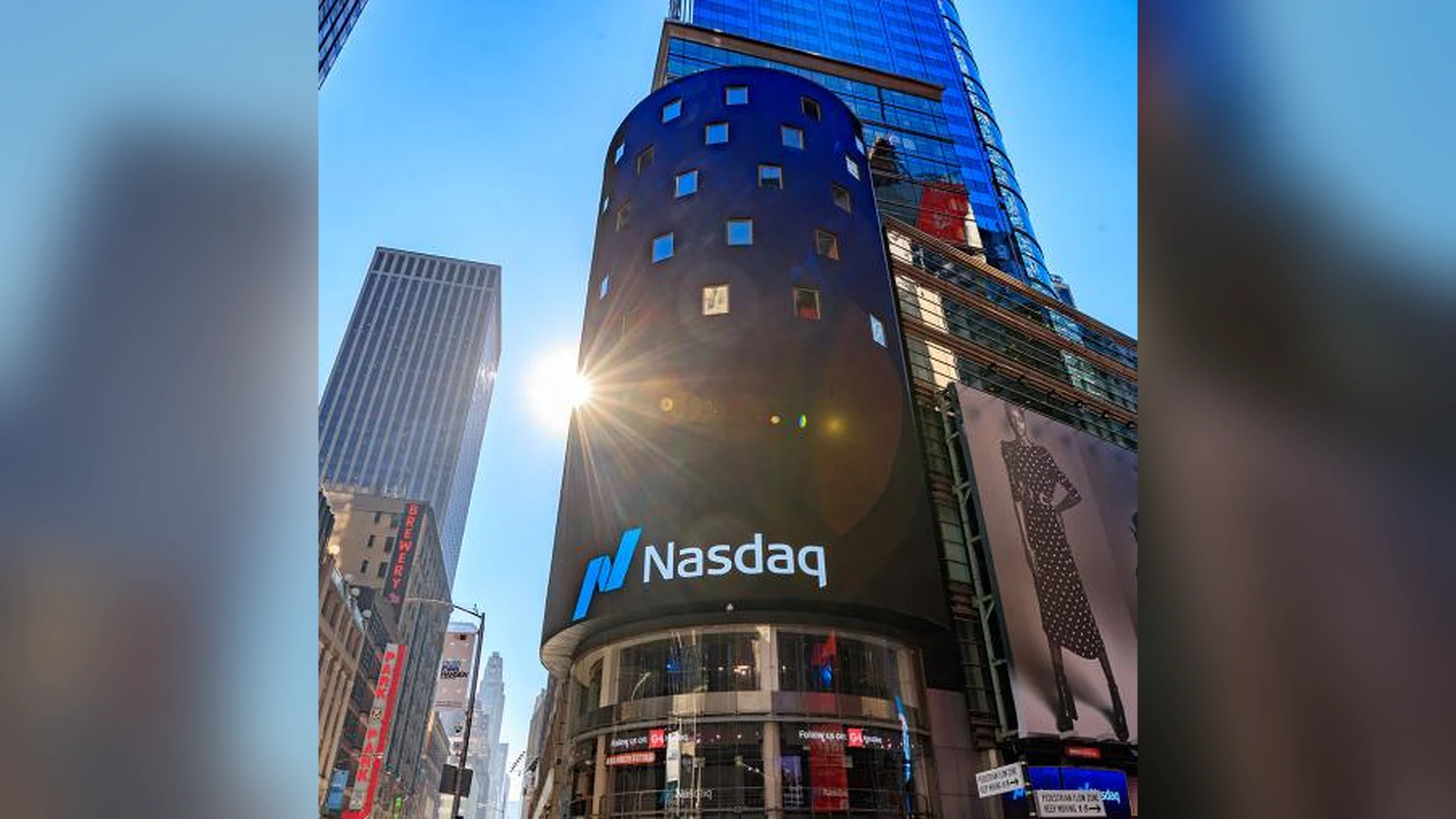
The offering covers 825,000,000 Class A shares. Of those, 801,351,354 are being sold by Anthropic itself and 23,648,646 by current shareholders — the seven co-founders, 3.38 million each. Anthropic gets nothing from that second block; the money goes to the sellers. The estimated price is $70 to $78 a share, and the company has applied to list on the Nasdaq Global Select Market under the symbol ANT.
The underwriting banks have a 30-day option to buy up to 123,750,000 additional shares, 15% more than the base offering. If they exercise it in full and the price lands at the top of the range, the total offering would come to around $74 billion. At the midpoint of the range, $74, Anthropic estimates net proceeds of roughly $84.6 billion from the public offering and the private placement that comes with it combined, or about $93.7 billion if the banks exercise the full option.
Goldman Sachs and Morgan Stanley lead a syndicate of 22 banks. And the prospectus carries the warning on its cover, in the language the SEC requires: the information is not complete and may change, the securities cannot be sold until the registration becomes effective, and the prospectus is not an offer to sell. The share delivery date is left blank.
Why there are two valuations, and both are right
The first headline that made the rounds was the $1.4 trillion one. The second, quieter one talked about $1.02 trillion. Both come from the same document; what changes is the number of shares being counted.
The lower figure, between $916 billion and $1.02 trillion depending on where the price lands in the range, comes from multiplying the price by the 13,086,672,593 shares of all classes that the prospectus says will be outstanding after the offering and the private placement. That is the valuation on shares outstanding, the one used to compare against the market value of a company that is already public.
The higher figure, between $1.26 trillion and $1.405 trillion, is the fully diluted valuation: about 18 billion shares, counting the stock options and restricted shares that could convert into shares in the future. That is the calculation CNBC published and the one most headlines picked up. At $78, the top of the range, the diluted math comes to about $1.4 trillion.
For context: Anthropic’s last private valuation, in its Series H round of May 2026, was $965 billion. The top of the range, on a diluted basis, sits about 45% above that figure; undiluted, barely 6% above.
The $26 billion from its own suppliers
The most curious part of the deal is not in the public offering, but next to it. Seven companies — AMD, Broadcom, Google, Micron, Microsoft, Nvidia and TSMC Partners — agreed to buy $26 billion worth of Class N, non-voting shares in a private placement at the IPO price. The placement is conditional on the public offering completing and closes immediately after it. The underwriters earn no commission on those shares, and the Class N shares are not registered in this offering.
Google and Nvidia would put in about $10 billion each, and AMD about $2.5 billion, according to the breakdowns that circulated on Tuesday. Google is funding part of its commitment with investment obligations already agreed in an earlier 2026 deal. Adding the public offering and the private placement together, the whole transaction could move up to about $90.4 billion.
The detail that matters is who the buyers are: the AI supply chain itself. Nvidia and AMD make the accelerators, TSMC makes the chips, Micron sells the memory, and Google and Microsoft are at once customers, competitors and cloud providers. Google, which just launched Gemini Omni 1.2 Flash, is buying $10 billion of its direct rival in models.
What company is going public
The prospectus also brings the numbers of the business, and they are extreme in both directions. In the third quarter of 2026, Anthropic took in $16.956 billion in revenue, up 1,127% from a year earlier. In the first nine months of the year, revenue reached $33.242 billion. It is growth that few companies in any sector have ever recorded.
The other side: in that same third quarter, the net loss was $23.291 billion, and in the second quarter, $66.309 billion. Adjusted non-GAAP operating income for the first nine months was $4.081 billion, a measure that excludes items like stock-based compensation and is not the same as net income. The honest reading is that Anthropic is growing at a historic pace and still losing money on a net basis, because the cost of training and serving the models is enormous.
That cost shows up in another figure in the prospectus: about $895.4 billion in compute purchase commitments as of September 30, 2026 and beyond. That is money already committed to computing capacity, the input without which there is no new model. The memory shortage and rising hardware prices we have covered on this site are part of that same problem: AI has become the biggest buyer of chips and memory in the world, and prices feel it.
Anthropic was founded in 2021 by former OpenAI employees, and its product is Claude, the assistant that competes with ChatGPT and Gemini. One day before launching the roadshow, on November 9, the company announced its new models, Claude Fable 5.2 and Mythos 5.2.
Who is in charge after the IPO
The most unusual thing about Anthropic is not in its accounts, but in its structure. It is a Delaware public benefit corporation, a form that requires balancing shareholders’ economic interests with the purpose stated in its charter: the responsible development and stewardship of advanced AI for the long-term benefit of humanity. Its headquarters is at 548 Market Street, San Francisco, and it is led by Dario Amodei, co-founder and CEO, and Daniela Amodei, president and chair of the board.
To protect that mission, the company created the Long-Term Benefit Trust, a trust of independent trustees with no financial interest that elects and can remove the Class T directors, who together will be the majority of the board. Class T shares carry no economic rights and no vote on general matters. And there is one more piece: just before completing the offering, Anthropic will issue a single Class F share to a company organized by the co-founders. That share carries a number of votes equal to 50.1% of total voting power on matters submitted to shareholders generally, including the election of directors other than Class T directors. It carries no economic rights either. Employees, not counting the co-founders, will receive Class E shares, which vote only on limited matters.
The result is that Anthropic will be a “controlled company” under Nasdaq rules: investors buy shares with one vote per share, but real control stays with the founders and the trust. It is the same design that protects the company’s mission from market pressure, and the same one that limits what a shareholder can change by voting. Whoever buys ANT is buying exposure to Claude, not control of Anthropic.
What is still undecided
What Anthropic filed is a proposal, not a closed sale. The roadshow is the part of an IPO in which the company and its banks travel to meet large investors, present the business and gauge how much demand there is before setting the final price. Until the registration becomes effective, no shares can be sold and no offers to buy can be accepted.
The dates circulating are reported, not confirmed by the company. CNBC, citing people close to the plans, says the price would be set on November 18 and trading would start on the 19th. The Wall Street Journal talked about a window of November 19 to 20. The prospectus leaves the delivery date blank, so any of those dates can move.
In the early hours of November 11 came the first sign that the range might fall short. The Financial Times, citing five people familiar with the matter, reported that the banks are preparing to raise the price above the $70 to $78 range after strong demand on the first day of the roadshow, which would lift the valuation to $1.5 trillion or more on a diluted basis, about $83 a share, roughly 7% above the top. That is a report, not an SEC filing: as of late Tuesday, amendment number 2 was still the most recent document in EDGAR.
Monday already brought a warning about how fast these numbers move. A draft circulated among the banks with about 867 million shares at $70 to $80, up to $69.3 billion at the top. Within hours, Anthropic said that data was inaccurate and withdrew the draft. The version filed on Tuesday is smaller: 42 million fewer shares and $2 less at the top.
For now, demand looks strong. CNBC reported that the book was already covered in the range on an allocable basis, with institutional demand stronger than SpaceX’s at the same stage of its IPO. On the retail side, Fidelity closes its request window on November 17 at 4:00 p.m. Eastern.
The context: AI goes public amid the doubts
The roadshow arrives at an awkward moment for the sector. AI stocks had been falling on doubts about whether the returns will justify the spending on chips and data centers. Anthropic is asking the market to value at more than a trillion dollars a company that loses money on a net basis and has nearly $900 billion committed to future compute. The IPO will be, in practice, the first public vote on what building and selling the models themselves is worth, not just the hardware that powers them.
Analysts do not agree even on the order of magnitude. Morningstar set a fair value of $1.7 trillion, but with a range of $500 billion to $3 trillion depending on how fast its tools are adopted.
The competition is not standing still either. Meta just launched Muse Voice, its avatar assistant, Google is pushing Gemini into all of its products, and OpenAI remains the rival everyone watches. Anthropic is the second big AI IPO after SpaceX’s in June, according to Tuesday’s coverage, and the first to put a pure model business on the table, with no rockets or social networks behind it.
What to watch in the coming days
The calendar ahead is short and full of dates that can still move. On November 17, Fidelity’s retail window closes. On November 18, according to CNBC’s reporting, the final price would be set. On November 19, also according to reports, ANT would start trading on the Nasdaq. None of those three dates is in the document filed with the SEC.
If the final price comes in above $78, the diluted valuation will pass $1.4 trillion and the Financial Times headline will have come true. If it comes in below $70, the headline will flip the other way and the conversation will be a different one: about an IPO that reached the market at the worst moment. And if it lands inside the range, the question will be how long the enthusiasm lasts after day one, because an IPO is not measured by its opening price, but by what the company does with the $84.6 billion it expects to raise.